Search

Special Session 1: Ferroelectric Materials and Devices
Introduction and Topics
This special session will broadly cover fundamentals of ferroelectric materials and their applications in emerging non-volatile memory devices. The development of artificial intelligence creates an increasing demand for memory with high capacity, fast speed, and low energy consumption. Ferroelectric based memory devices are promising candidates due to their scalability, CMOS compatibility and low power operation. Fundamental study of materials and devices is crucial to gain deeper insight into the solution of key challenges for practical applications.
Topics of this special session includes but not limited to:
- →1. Discussion of growth mechanisms, material characterization, fabrication methods, structure design, and operation optimizations to improve performance and reliability of ferroelectric devices.
- →2. Theory and simulations of ferroelectric materials or devices, especially on the fundamental physics of ferroelectricity and key challenges for memory devices.
- →3. Reports on discovery of novel ferroelectric materials (like wurtzite-based, 2D ferroelectrics or other unconventional materials) and their prospective applications.
While there has been significant recent progress in ferroelectric materials synthesis, characterization, and device performance, there are still many fundamental questions on remaining device bottlenecks and their physical origins. This special session will bring together scientists and engineers from both experimental and theoretical backgrounds to uncover new opportunities to tackle challenges in ferroelectric materials and devices.
Special Session Chairs
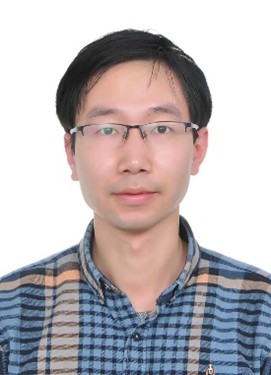
Kechao Tang
Peking University | China
Kechao Tang is now an assistant professor in the School of Integrated Circuits, Peking University, China. He received his B.S degree from Peking University, China, in 2012, and his Ph.D degree from Stanford University, USA, in 2017. Dr. Tang worked as a postdoctoral researcher in University of California, Berkeley, USA from 2017 to 2020. His current research interest includes emerging non-volatile memory devices, especially ferroelectrics memories based on hafnium oxide, and phase transition materials for novel electrical applications. Dr. Tang has authored more than 90 papers with a total citation over 5400 and an h-index of 32. He published papers as the first or the corresponding author in scientific journals and conferences including Science, Nature Materials, Science Advances, IEEE IEDM and IEEE VLSI etc. He is the head scientist of research projects funded by National Key Research and Development Program of China, and National Natural Science Foundation of China. He serves as TPC members for IEEE EDTM, IEEE VLSI TSA and IEEE CSTIC.
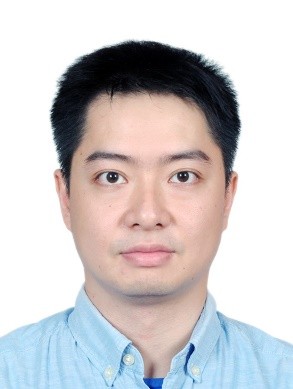
Xiao Yu
Xidian University | China
Xiao YU is currently a professor of the Faculty of Integrated Circuit and Hangzhou Institute of Technology, Xidian University, China. He received his B.S and M.S degrees from Tsinghua University, China, in 2009 and 2012, respectively, and his Ph.D degree from the University of Tokyo, Japan, in 2015. His research interests focus on novel semiconductor device technologies and their reliability, including fabrication and characterization, the reliability mechanism, the modeling and simulation of novel devices, and arrays of non-volatile memories with new channel material. He has undertaken several projects as the project leader funded by the Ministry of Science and Technology, the National Natural Science Foundation of China, and five provincial and ministerial projects. He has published over 120 papers in highly recognized journals in the industry, such as IEEE Transactions on Electron Devices (TED) and IEEE Electron Devices Letter (EDL), and at international conferences, including top-level conferences such as International Electron Devices Meeting (IEDM) and VLSI Symp., for over 1500 citations. He was granted the Roger A. Haken Best Student Paper Award at IEDM 2015 and the EDS Japan chapter Award by IEEE.
Contact
Conference Secretary: Ms. Joyce, Email: ieeeicsict@outlook.com
Copyright © 2026
Website Visits:
 loading......